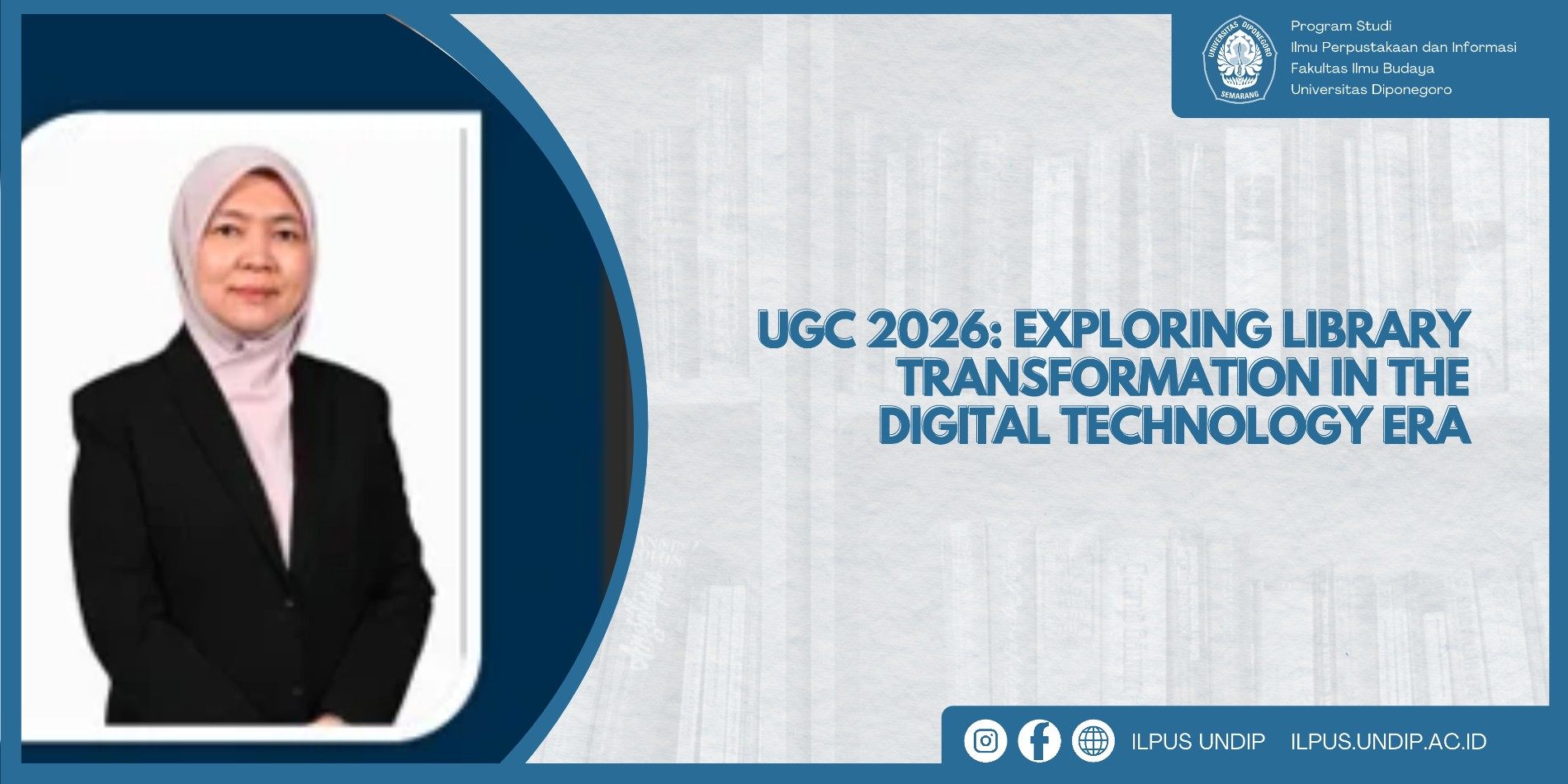
Semarang, September 24th, 2026 – The Library and Information Science Study Program, Faculty of Humanities, Diponegoro University, held the Undip Global Classroom (UGC) program, attended by new students of the 2026 cohort. Bearing the title “ICT in Digital Libraries: Transforming Information Services for a Digital World“, this event featured Ts. Dr. Siti Fadzilah Mat Noor, Ph.D, a senior lecturer and Assistant Dean (Teaching & CITRA) from the Centre for Software Technology and Management (SOFTAM), Faculty of Information Science and Technology, Universiti Kebangsaan Malaysia (UKM), as the keynote speaker. In her opening remarks, she emphasized that Information and Communication Technology (ICT) is an integrated ecosystem incorporating hardware, software, networks, data, people, and policies to transform how knowledge is collected, managed, stored, and disseminated.
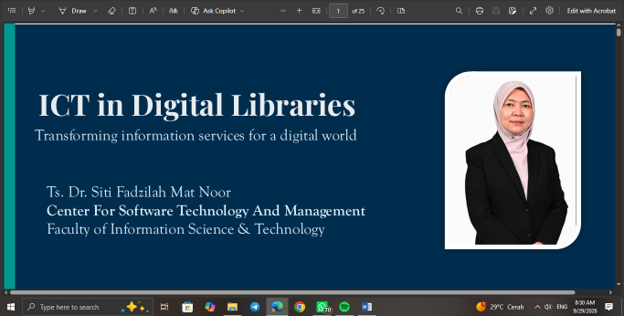
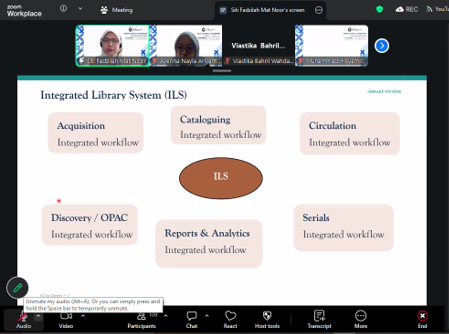
During her presentation, Ts. Dr. Siti Fadzilah outlined the continuous evolution of libraries, transforming fundamentally from traditional, print-based, and manual systems to automation, digital libraries, and ultimately smart libraries. Modern ICT infrastructure supports this transformation, including the Integrated Library System (ILS), which streamlines workflows such as acquisition, MARC-standard cataloging, barcode/RFID-based circulation, and analytical reporting. Essential digital library services are further strengthened through Online Public Access Catalogs (OPAC) as global access gateways, subscribed e-journal databases, institutional repositories for preserving academic output, and real-time virtual reference services.
In addition to foundational infrastructure, she highlighted the integration of emerging technologies, such as Artificial Intelligence (AI) for automated metadata generation and 24/7 reference chatbots, Internet of Things (IoT) and RFID for smart shelves and inventory tracking, cloud computing for scalable repository storage, and immersive technologies like Virtual Reality (VR) and Augmented Reality (AR). As concrete examples of immersive technology adoption, she shared real-world implementations, including the Immersive Learning Centre at the National Library of Malaysia and the GEMILANG digital catalog at Perpustakaan Tun Seri Lanang, UKM. Nevertheless, she underscored the importance of responsible AI adoption within library environments, stressing adherence to ethics, privacy, copyright, and accuracy—where AI serves to augment professional human judgment rather than replace it.
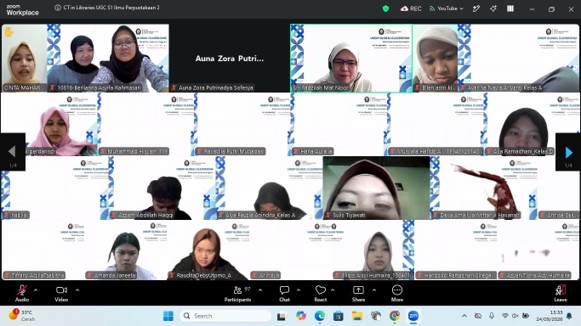
The presentation concluded with a reaffirmation that despite rapid technological advancements, the core mission of information institutions remains unchanged: connecting people with authentic, high-quality information. By adhering to user-centered design principles and robust data security governance, ICT adoption is expected to enhance overall user experience. This UGC session is anticipated to deliver comprehensive academic insights into global ICT trends for incoming Library and Information Science students at UNDIP, while simultaneously strengthening international academic and research collaborations between Diponegoro University and Universiti Kebangsaan