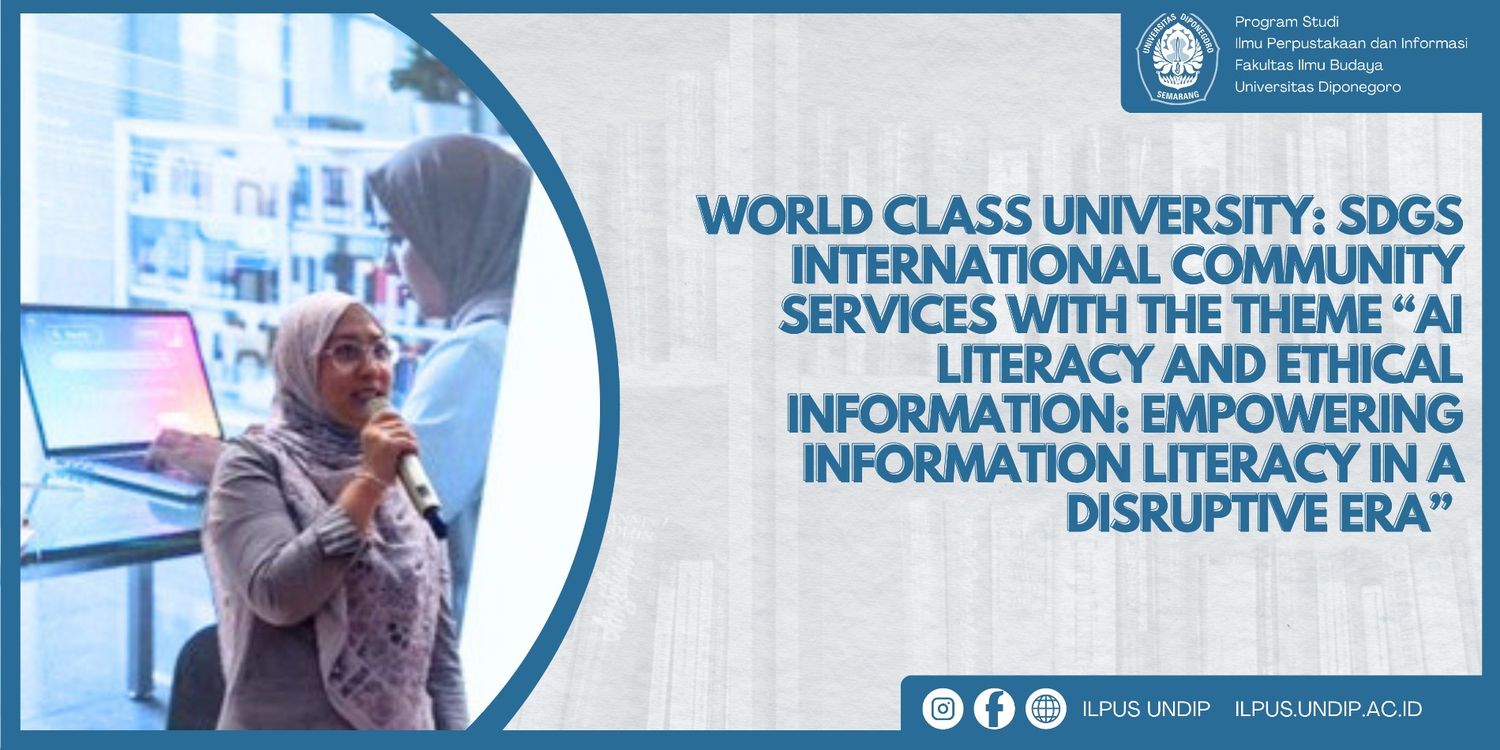
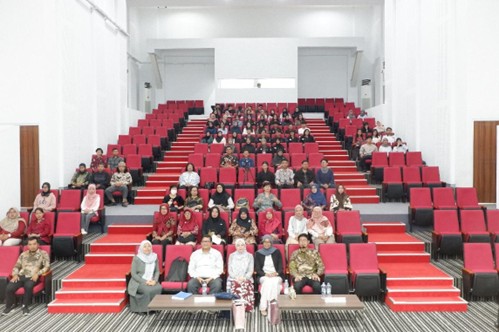
Semarang, May 5th, 2026 – The Library and Information Science Study Program, Faculty of Cultural Sciences, Diponegoro University, has held the World Class University: SDGs International Community Services agenda with the theme “AI Literacy and Ethical Information: Empowering Information Literacy in a Disruptive Era,” presented by Prof. Dr. Noorhidawati binti Abdullah, a professor from the Department of Library and Information Science, Universiti Malaya, Malaysia, at the Art Center A FIB UNDIP.
On this occasion, Prof. Hida began his presentation by discussing the changing landscape of human habits in seeking information. He said that the challenge in the current era is no longer about finding information but finding the right information and understanding how to critically evaluate that information.
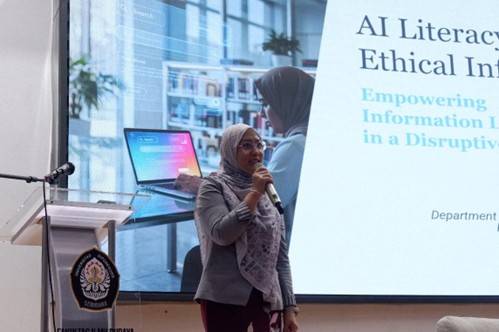
Prof. Hida explained that the information ecosystem has currently been disrupted due to technological advancements, misleading content, and changes in user habits in seeking information. Thru this session, he highlighted the emergence of various consequences in the academic sphere, such as citing inaccurate sources, the spread of misinformation, and violations of academic integrity.
Based on the previous situation, Prof. Hida then explained the importance of AI literacy in the current era. He said that AI literacy has become a competency that every academic must possess to remain in an ethical and credible information ecosystem. One of them is by evaluating information using the SMART framework and the CRAAP Test.
He also highlighted how the use of AI in the academic and research world is now connected to equality, research quality, and scientific integrity. He stated that the development of fair AI competencies ensures that all learners can participate in the knowledge economy shaped by AI. This then becomes one of the goals of point 4 of the SDGs, which is the improvement of education quality.
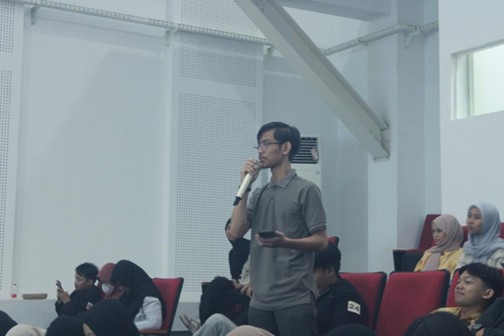
At the end of the session, he also described several scenarios related to case studies of the current state of the information ecosystem, which were responded to by the audience. Thru this session, Prof. Hida not only presented the material he brought but also gave the audience the opportunity to respond to the scenarios he provided, resulting in a two-way interaction that enlivened the atmosphere of the event and facilitated an exchange of knowledge between Prof. Hida and the audience.


