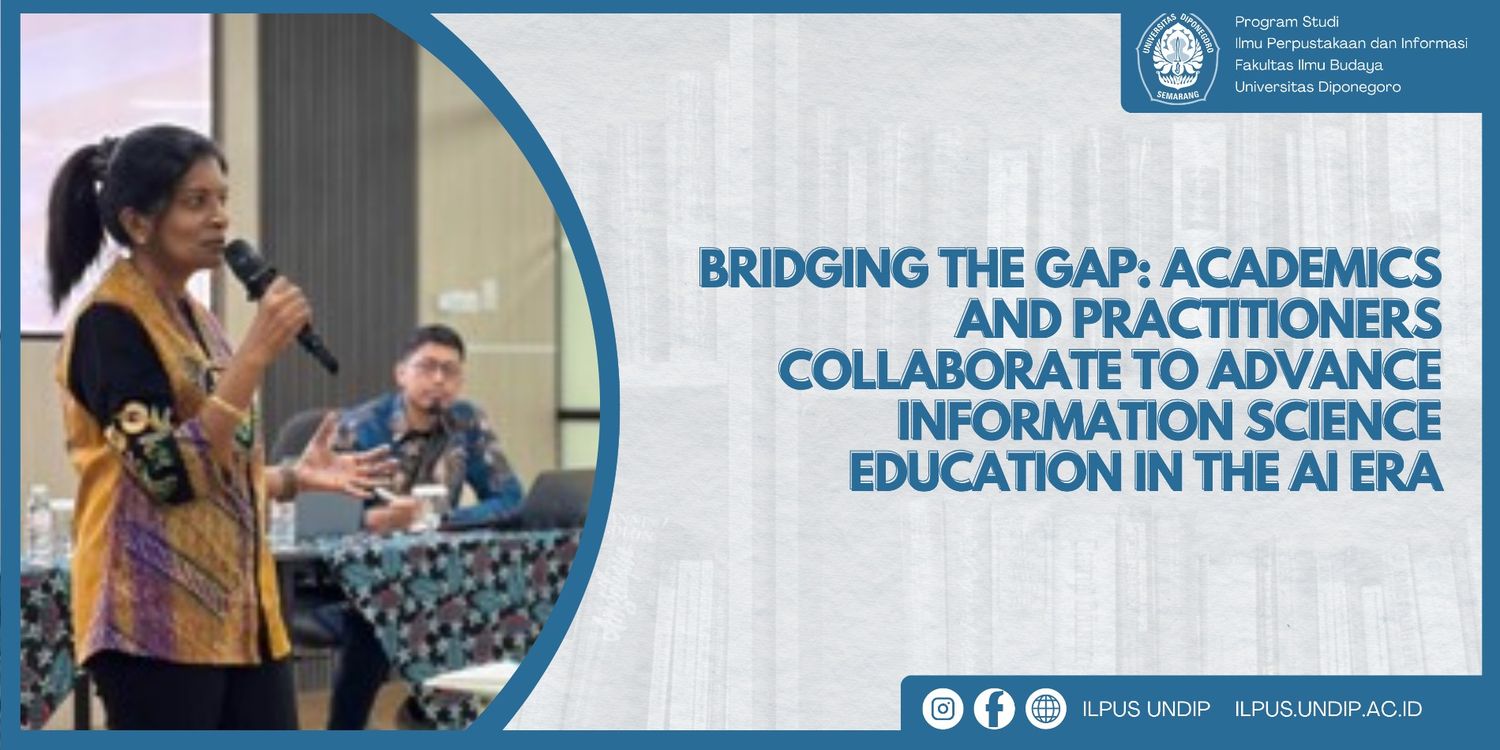
The Undergraduate Program in Library and Information Science, in collaboration with the UPT Library and UNDIP Press, held a Focus Group Discussion (FGD) entitled “Bridging the Gap: Academic–Practitioner Collaboration in Information Science” on Thursday, July 2, 2026. The forum served as a platform for academics and practitioners to exchange perspectives on developing an Information Science curriculum that is better aligned with the evolving demands of the profession in the era of Artificial Intelligence (AI).
The discussion featured two distinguished speakers: Prof. Mega Subramaniam from the College of Information, University of Maryland, United States, and Safirotu Khoir, Ph.D. from Universitas Gadjah Mada, Indonesia. The session was moderated by Zulfa Avidiansyah, S.IIP., M.A., a lecturer in the Undergraduate Program in Library and Information Science at Universitas Diponegoro. Participants included librarians from Universitas Diponegoro, faculty members from the Undergraduate Program in Library and Information Science and the Applied Bachelor’s Program in Information and Public Relations, as well as representatives from Soegijapranata Catholic University and the National Research and Innovation Agency (BRIN).
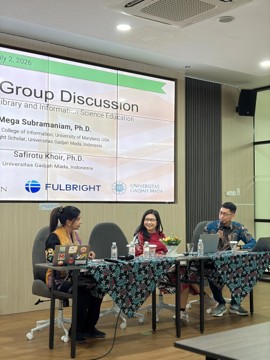
The rapid advancement of AI technologies provided the primary context for the discussion. As technological transformation continues to reshape the information profession, higher education institutions are expected to prepare graduates with not only strong academic foundations but also the practical competencies required in today’s workplace. In this regard, collaboration between academics and practitioners plays a vital role in bridging the gap between classroom learning and professional practice.
Throughout the discussion, the speakers encouraged participants to critically examine the relevance of existing courses within the Information Science curriculum. The conversation focused on identifying courses that remain essential, updating learning content to reflect current developments, and integrating emerging competencies into the curriculum. Prof. Mega Subramaniam also shared international perspectives on curriculum development, providing valuable insights into preparing graduates who can compete in an increasingly globalized profession.
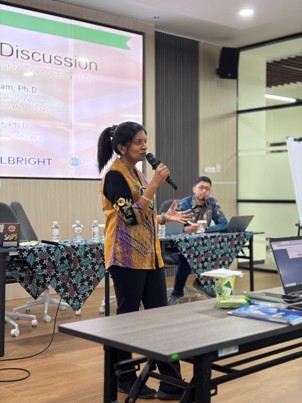
Academics and practitioners actively contributed ideas based on their respective experiences. Their diverse perspectives are expected to inform the development of a more adaptive curriculum that responds to technological advances and the changing needs of the information industry. Beyond technical competencies, the discussion also highlighted the importance of incorporating ethical considerations surrounding the use of AI into the education of future librarians and information professionals.
One notable recommendation came from BRIN representatives, who proposed incorporating Research Data Management (RDM) into the curriculum. This competency is considered increasingly important in supporting research data stewardship and strengthening librarians’ roles within the broader research ecosystem.
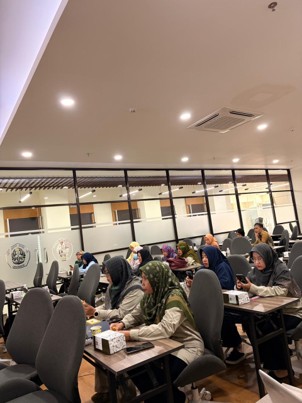
The interactive discussion concluded with a lively exchange of ideas, recommendations, and reflections on the future of Information Science education. The forum marked an important step toward developing a curriculum that is responsive to technological change while equipping future librarians and information professionals with the knowledge and skills needed to thrive in the AI era.