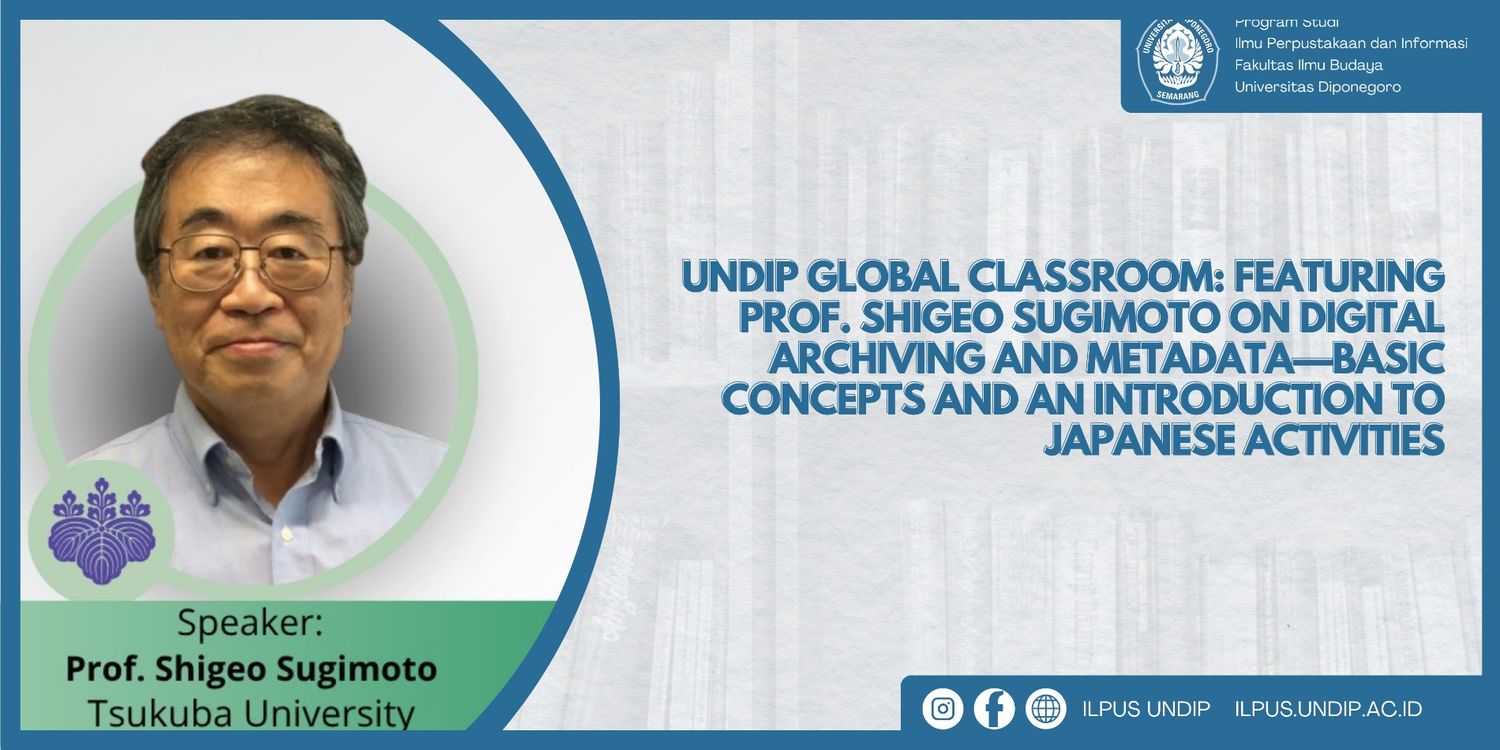
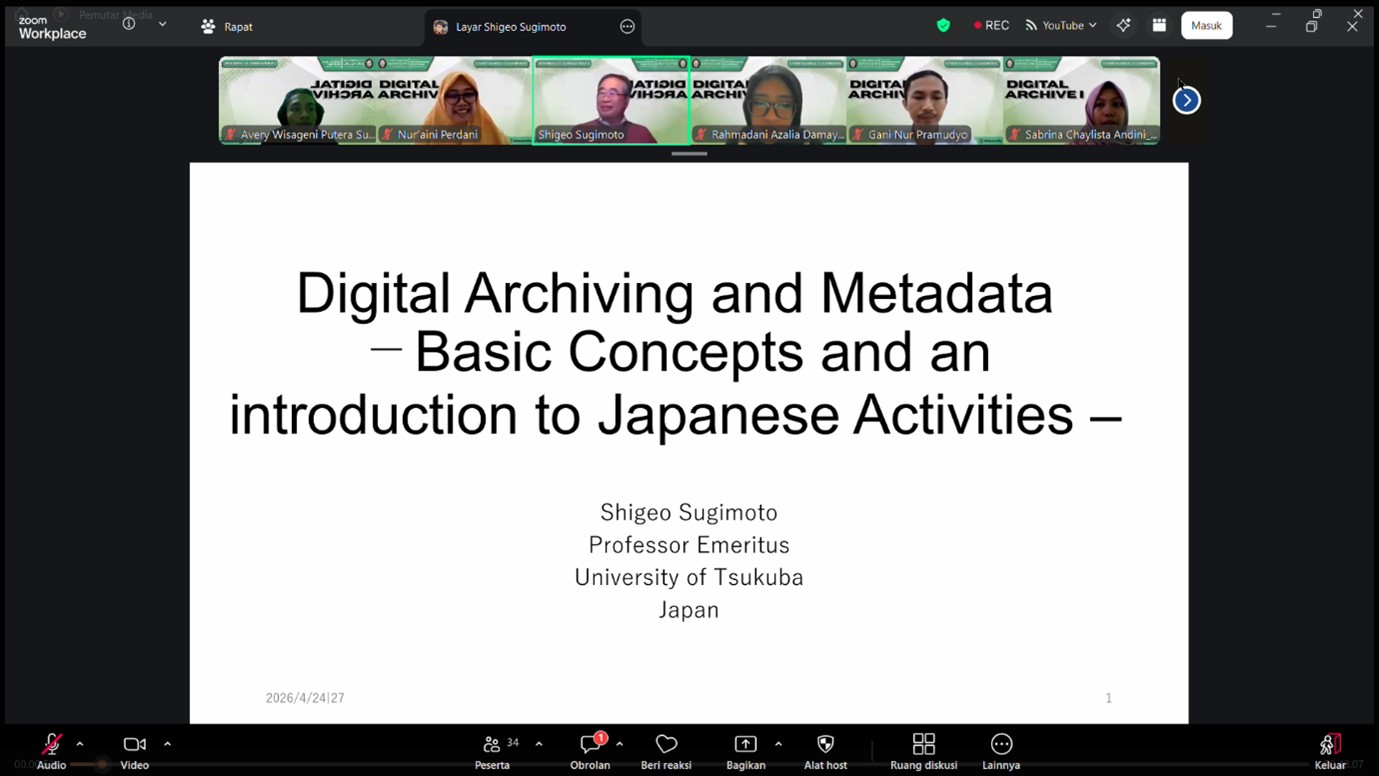
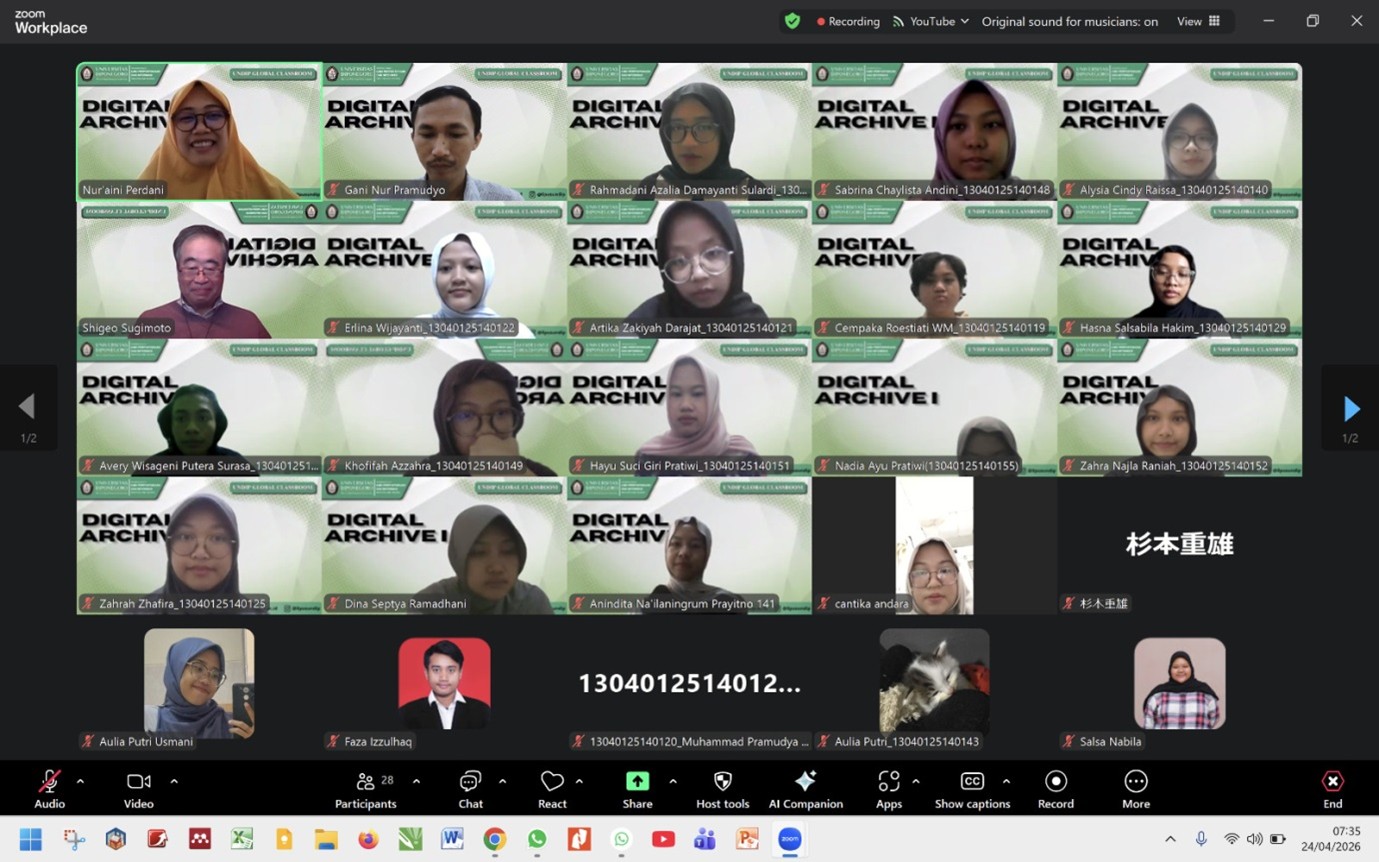
Semarang, April 24, 2026 – The Library and Information Science Program of Universitas Diponegoro held an Undip Global Classroom session as part of the World Class University Program via Zoom Meeting. The event featured Prof. Shigeo Sugimoto from the University of Tsukuba, Japan, as the guest speaker, delivering a lecture titled Digital Archiving and Metadata: Basic Concepts and an Introduction to Japanese Activities.
Prof. Sugimoto is a Professor Emeritus at the University of Tsukuba with expertise in digital archiving, digital libraries, and metadata. He earned his bachelor’s, master’s, and doctoral degrees in Information Science from Kyoto University and has actively contributed to various digital archiving and metadata committees organized by the Japanese government. In addition, he has been actively involved in international metadata communities, including the Dublin Core Metadata Initiative (DCMI).
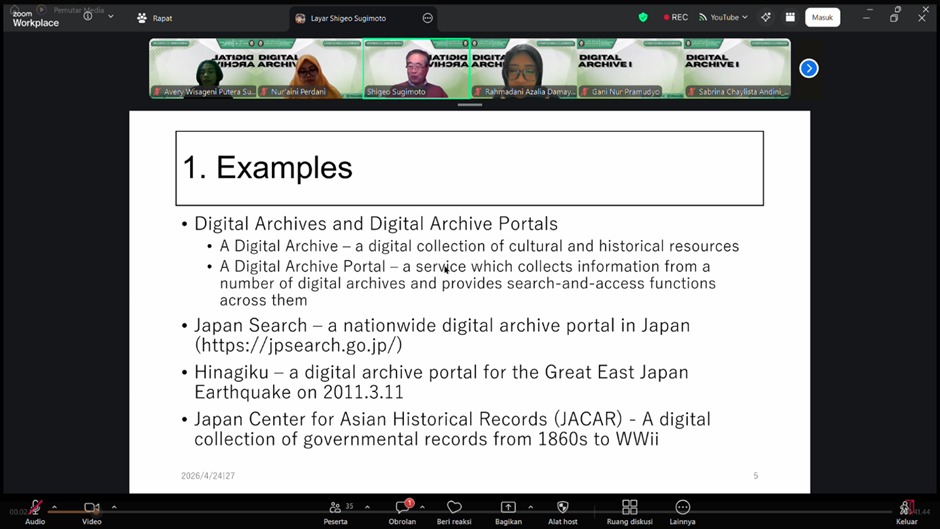
At the beginning of his presentation, Prof. Sugimoto introduced several examples of digital archive implementations in Japan, including Japan Search as a national digital archive portal, Hinagiku as a digital archive documenting the 2011 Great East Japan Earthquake, and the Japan Center for Asian Historical Records (JACAR), which provides access to historical Japanese governmental records. These examples demonstrated how digital archiving is applied to preserve and provide access to cultural and historical resources.
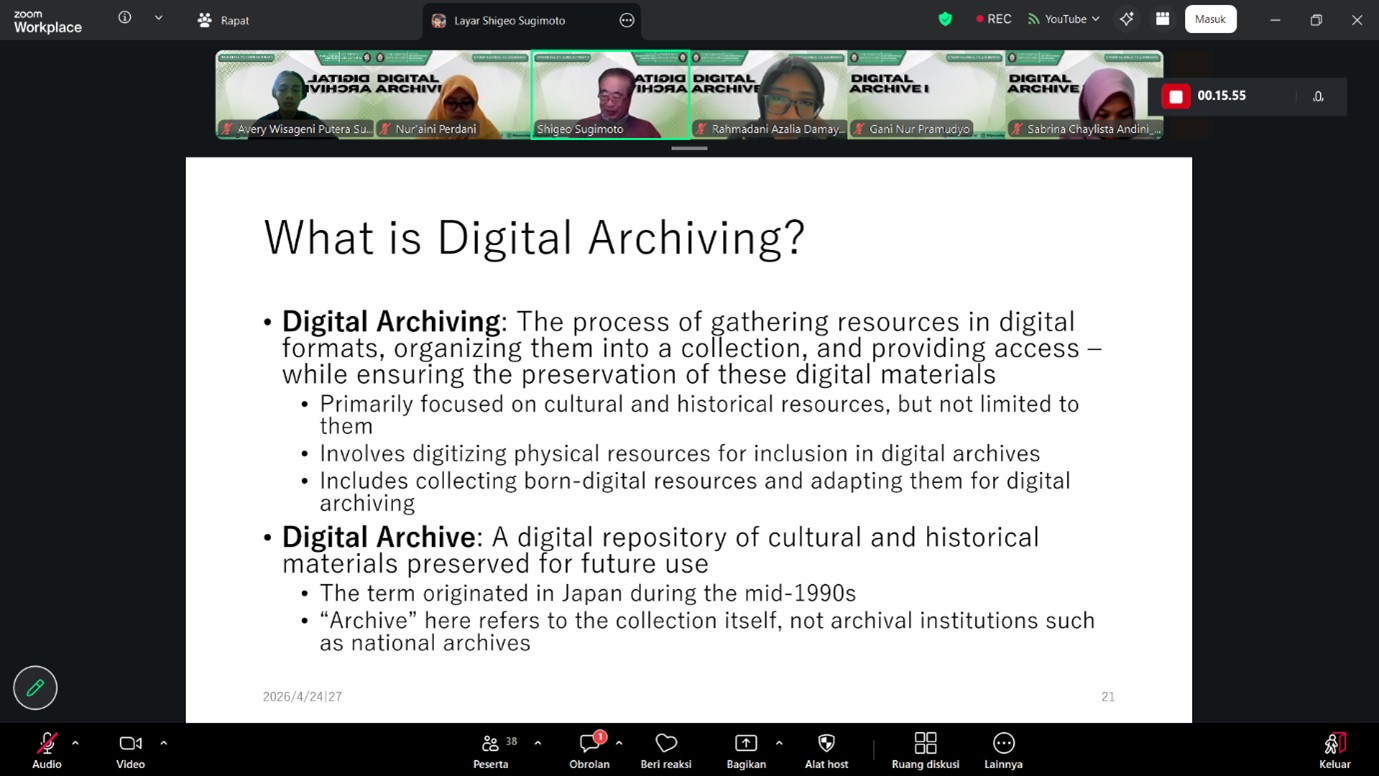
Prof. Sugimoto further explained the basic concept of digital archiving as the process of collecting resources in digital formats, organizing them into collections, providing access to users, and ensuring the long-term preservation of digital materials. According to him, digital archives function not only as storage repositories but also as systems that enable digital resources to remain accessible, manageable, and sustainably maintained over time.
In discussing metadata, Prof. Sugimoto defined it as “data about data,” referring to information that describes a resource for specific purposes such as search, access, and information management. He emphasized that metadata is a fundamental element of digital archiving, as it enables digital resources to be systematically organized and accessed.
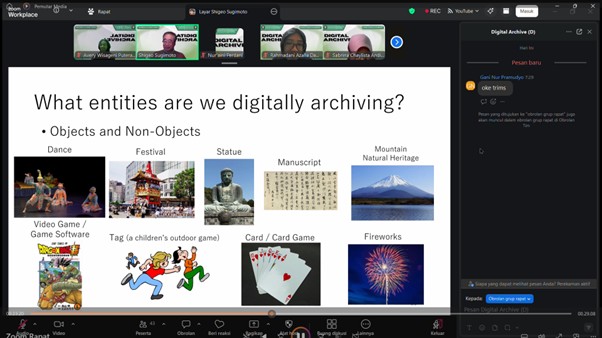
Prof. Sugimoto also highlighted that digital archiving is not limited to physical objects such as books, manuscripts, or historical documents, but also encompasses intangible and experiential entities such as rituals, performances, festivals, and disaster events. According to him, archiving such entities requires recording or documenting their real-world manifestations before they can be preserved in digital form.
In the concluding section, Prof. Sugimoto emphasized that one of the primary challenges in digital archiving is ensuring the long-term sustainability of digital resources. This includes maintaining digital data, software, hardware, and other supporting technologies to ensure that digital archives remain accessible as technology evolves. In addition, he highlighted various future issues in digital archiving, including the advancement of artificial intelligence (AI) and the challenges of archiving virtual objects and emerging digital resources.
Writer: Avery Wisageni P.S