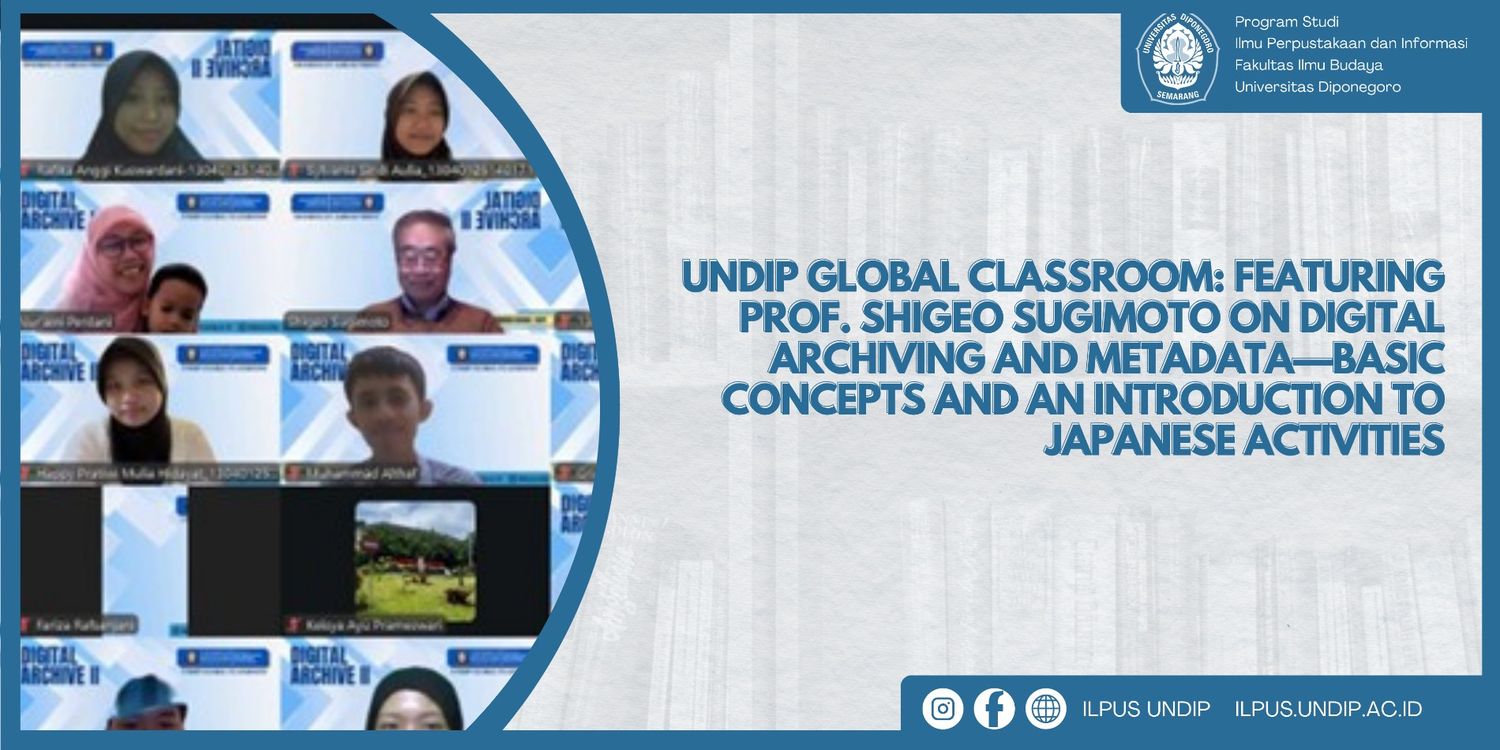
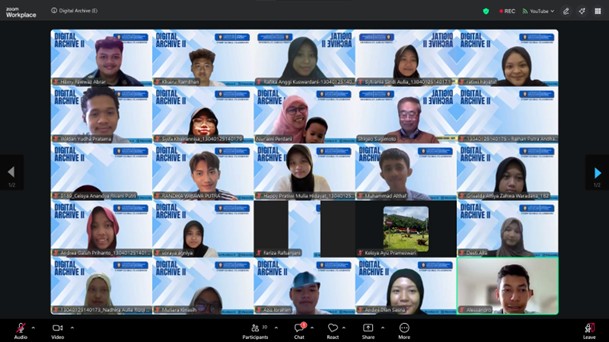
Semarang, April 27, 2026 – The Library and Information Science Program of Universitas Diponegoro held an Undip Global Classroom session as part of the World Class University Program via Zoom Meeting. The event featured Prof. Shigeo Sugimoto from the University of Tsukuba, Japan, as the guest speaker, delivering a lecture titled Digital Archiving and Metadata: Basic Concepts and an Introduction to Japanese Activities.
Prof. Shigeo Sugimoto is a leading expert in the field of digital archiving and metadata, with a primary focus on information preservation and cultural heritage. He is known for his research contributions regarding the digital archiving lifecycle, information system development, and the promotion of global metadata standards such as Dublin Core. His expertise has served as the foundation for various major archival projects, including platforms like Japan Search and JACAR, to ensure sustainable access to history in the digital age.
In this era of information transformation, the management of cultural and historical archives is entering a new phase. Based on the material presented by Prof. Sugimoto, the concept of digital archiving is key to ensuring the sustainability of our historical heritage so that it remains relevant and accessible to future generations. Digital archiving is defined as a comprehensive process that encompasses data collection, organization, storage, access provision, and the preservation of that data. This data can originate from digitization (such as scanning physical documents) or data that has been in digital form from the start (born-digital). One key point emphasized is that digital archives do not stand alone. Through platforms such as Japan Search, Hinagiku, and JACAR, various digital collections are now interconnected within a single large portal, making it easier for the general public, students, and researchers to access them.
Without metadata, a digital archive would be difficult to find and would lose its meaning. Metadata is often referred to as “data about data” and serves to describe an archive through details such as title, author, and date. To ensure that this data is universally understandable, metadata standards such as Dublin Core, MARC, METS, RDF, and OAIS are used. The following are types of sources that can be digitally archived:
- Tangible (physical): such as books, photos, and buildings
- Intangible (non-physical): such as dances or cultural traditions
- Ephemeral (temporary): such as events or performances
- Digital/active: such as games or software
The world of digital archiving deals not only with physical (tangible) objects like books or photographs. The greatest challenges arise when managing non-physical objects, which are more difficult to describe and thus require more in-depth audio-visual recording methods to be transformed into complete digital objects.
Implementasi sistem pengarsipan digital yang baik melalui tahapan collect, organize, store, dan provide access adalah investasi panjang bagi peradaban. Dengan standar metadata yang kuat, warisan budaya yang rapuh dapat tetap hidup dan dapat dijangkau oleh siapa saja, di mana saja, melalui jaringan internet.
The implementation of a robust digital archiving system—through the stages of collecting, organizing, storing, and providing access—is a long-term investment in our civilization. With strong metadata standards, our fragile cultural heritage can be preserved and made accessible to anyone, anywhere, via the internet.
Writer: Ahmad Aziz Ibrahim